Showing posts with label Cats. Show all posts

Sunday, May 12, 2013

How To Properly Care For Your New Kitten

Kittens develop quickly, so it is important for the animals to receive excellent care during the first several months of their life. Kittens that are well cared for are more likely to grow into healthy, happy pets that enjoy the company of people and other animals living in the home. Whether pet owners are dealing with an unexpected litter or they have just brought a new kitten home, they should take the time to learn how to care for kittens.

If a mother cat has abandoned her kittens or she is unable to feed them for any reason, they need to be fed a nutritional mother's milk supplement until they are six weeks of age or until they are able to eat solid food and drink milk or water on their own. Kittens should visit the vet between six and nine weeks for an examination, parasite testing and to receive their first set of vaccinations. They need to receive three sets of vaccinations in total. The vaccinations protect the kitten from contracting a variety of serious diseases including rabies, feline distemper and feline rhinotracheitis. A good vet will answer any questions people may have about pet health and caring for kittens during the examination.

When bringing a new kitten home, it is best to keep it in a small room for a few days so it has time to adjust to its new surroundings. Any household pets should be introduced slowly so the kitten feels safe and secure. Kittens are very curious creatures so people need to put any small objects away to prevent choking. Once the kitten begins to relax in its new environment, it can begin to roam the house. It is a good idea for people to train their kitten to use a scratching post while they are young. Pet owners should provide a scratching post for their cat as well as a comfortable pet bed and plenty of cat toys.

It is a popular misconception that kittens are ready to leave their mother at six weeks of age. By six weeks, most kittens are eating dry or wet food, drinking water out of a bowl and using the litter box but this does not mean they are psychologically ready to go to a new home. Between six and twelve weeks of age, kittens learn how to interact well with their littermates and mother. If taken from their mother too soon they can develop lifelong anxiety problems. Since a kitten's immune system is not developed until around three months of age, kittens that leave their mother too early are at risk of becoming ill. The ideal time for kittens to go to a new home is at twelve weeks of age.

6 Common Cat Health Problems Faced By Pet Owners Today

If you are an existing cat owner or thinking of getting a kitten, you have to understand that similar to humans, felines too are prone to health conditions, some of which are common while others more severe. Immediate and effective treatment is essential for the well-being of your kitty and understanding the common cat health problems and symptoms will enable you to care for your cat in a more responsible manner. The following article lists 6 common problems faced by cats today.

  • Cat Hairballs

As cats often groom themselves, they are prone to hairballs. These are conditions that occur when the cat swallows balls of hair that are shed from their body while they are in the process of cleaning themselves. This becomes a serious problem when it goes to the intestines and creates a blockage, which could result in the death of the cat.

  • Fleas and Mites

If you allow your cats to venture outdoors often, you have to mentally prepare yourself for the day that it contracts fleas, especially those that cause anemia or carry the tapeworm egg. Another common problem in cats is mites, which occur in their ears. When you see your cat scratching or shaking her head excessively, it is likely that it has mites.

  • Worming

Roundworms and tapeworms infection are also two common cat health problems today. Roundworms often lead to vomiting and diarrhea in cats while tapeworms can cause skin irritation, especially around the anus. Regular de-worming is essential for cats to keep them away from such ailments.

  • Urinary Tract Infection

Cat urinary tract infection is more common in males though it can affect female cats as well. It is a condition where felines need to pass excessive urine, either in quantity or frequency. Cat urinary tract infection is also marked by an enlarged bladder and requires immediate attention.

  • Kidney Diseases

Cat renal failure or kidney failure is also a common occurrence in cats, which require immediate attention to avoid further problems, especially death. Increased thirst is one of the symptoms of renal failure in cats.

  • Bronchial or Respiratory Diseases

Bronchitis, especially of a chronic nature, and asthma are two common diseases in cats. Coughing is a common symptom of chronic respiratory diseases in cats and requires attention from your vet.

While these are just a sample of some common cat health problems today, pet owners are advised to keep a look out for the above symptoms and to consult a vet if necessary.

The Most Common Cat Health Problems

You may think that your kitty is self-sufficient, but like any other pets; she needs your help to ensure her excellent health. This means that you need to bring your kitty to your local animal clinic for regular check-ups and get her the vaccine shots required to protect her from cat illnesses and diseases. Prevention and early detection of diseases and health problems are the keys to ensuring that you cat is in excellent condition.

As a pet owner, you must also educate yourself about the common ailments that your pet might suffer from. The more aware you are about their ailments and symptoms, the better you can provide care and treatment before the illness becomes fatal. Here are a few of the most common cat health problems.

  • Skin Problems

This is a very common problem among felines. You might discover skin problems in your kitty when you groom them, and chances are it is still treatable. Itching and hair loss are the common symptoms of dermatological problems. Other symptoms might include dry skin, redness, blisters, scabs, or bad skin odor. If you notice that your cat is scratching her body excessively, or if she bites or chews at herself, you must try to pinpoint the cause of the irritation and take the necessary action. The most common causes of skin problems are:

Food allergies
Flea allergies
Fungal infection
It is vital to address this condition as soon as you observe the symptoms on your cats. In addition, make sure that it is not a skin problem that can be transmitted to you or your other feline friends.

  • Heartworm Disease

Cats are not the usual host for heartworm; however, felines who are infested with them might show certain symptoms, such as coughing, vomiting, and respiratory problems. This disease can be fatal and it is very unfortunate that there is no known treatment. Thankfully, many cats can fight this disease on their own. In addition, veterinarians may also prescribe medication to reduce the symptoms or they might perform surgery to remove the heartworms; however, this is also a risky procedure.

  • Obesity

Based on recent studies, about 50% of cats are overweight. Cat obesity is very common and it can be the result of free-feeding or making food available to cats all day and all week, high-carb dry food, and sedentary lifestyle. You have to understand that obesity can lead to other health problems. In fact, obese felines are more likely to suffer from diabetes, non-allergic skin problems, and they have a higher risk of developing liver disease.

  • Feline Urinary Tract Disease (FLUTD)

This is a general term for various conditions that affect the feline bladder and urethra. The common symptoms of this condition are:

Difficulty urinating
Pain when urinating
Frequent urination
Blood in your cat's urine
Your cat might excessively lick their genitals
This condition is commonly diagnosed in overweight or middle-aged cats that are in a dry food diet or have restricted access outside. It is vital to provide your kitty with fresh, clean water supply to help increase their water intake. In doing so, you can prevent this condition from developing.

This article is written by a writer who specializes in pet care and health. She advises her readers to consult a vet from Arbor Vet to find out more about the common cat health problems and how to prevent them.

How to Choose the Best Cattery

If you are going away on a vacation or a business trip then you may have to place your cat into a cattery. Before you choose a cattery you should take a number of things into consideration to make sure that it is the most appropriate choice for you cat. This article provides some simple tips that will allow you to choose the best cattery in no time at all.

  • Location

The location of the cattery is an important thing to consider. You should make sure that it is close enough to where you live so that you can easily drop your cat off there and collect it on return from your trip.

  • Living Space

You will want to ensure that the cattery has the appropriate living space to make your cat as comfortable as possible. The space should also be a good temperature and have areas which out of direct sunlight; some catteries have indoor and outdoor sections. Most catteries will offer a comfortable bed or sleeping area for your cat as well as a litter tray. The area should be kept clean at all times. You can check out pictures of the cattery online, and you should also inspect the living space when you go to the cattery in person to make sure it is up to your standards.

  • Feeding

Obviously your cat should have access to fresh water at all times. Most catteries will have set feeding times for all of the cats. If your cat has special dietary requirements then be sure to inform the staff who should be able to accommodate your cat's needs.

  • Cost

The cost of the cattery is going to affect where you choose to send your cat, but at the end of the day you should always aim to pick the cattery which you feel will be able to look after your cat in the best way possible. Most catteries operate on a daily rate, and some will offer discount rates if you have two or more cats as they can share accommodation.

  • Vaccinations

Most catteries will ask that any cats that are staying there have had all of the correct vaccinations. This is to prevent the spread of disease and make sure that all cats are healthy.

  • Reviews

It may also be worth checking out the reviews of the cattery. You can do this by asking for past client testimonials, or by looking online for some independent reviews of the cattery. You may also want to ask friends and family if they have had any experiences in using a cattery, or if they can recommend a place to you.

  • How to Find a Cattery

The best place to search for catteries in your area is online. All large catteries will have a website which will list more detailed information on the services that they offer, as well as information on how to book a stay for your cat. You should book with plenty of time in advance to ensure that you can get a spot in your chosen cattery. Always take a look around the cattery before dropping your cat off to make sure it is clean and that all the cats are looked after properly.

Cat Pee Can Be Controlled In The Home

If you love your cat as well as your home, you will need to deal with the unpleasant task of dealing with cat pee. Few things can make your home as unpleasant as the stink of cat urine. If you want to reside in a relatively stink-free and stain-free home, cat house training is a necessity. Your home will smell and look better. Your cat and guests will also want to thank you for making your home a pleasant one.
For several reasons, which I will explain, cat pee can be very strong. Their urine can be quite concentrated due to the fact that they do not drink a lot of water proportionately to some of the other animals. Because of this stones and 'sand' can form in their urinary system causing problems and even dangerous blockages. Because cats can be so finicky about their water they may refuse to drink enough.
Providing free water changed very often and in vessels they like helps dilute the urine and produces cat pee that does not smell quite as strong. Some vets advocate using a little salt in food to encourage cats to drink more water, but always check before doing this. In nature, cats need very strong, smelly urine as part of their natural behaviors to mark out a territory and establish who is the "top cat."
Cats that are restricted to indoor life may also mark their territory by "spraying". When spraying, the animal releases cat pee and other glandular secretions that contain malodorous chemicals onto surfaces. Reducing stress and behavioral training can correct this behavior. However, many non-breeders choose to neuter their pets to circumvent the problem. Spraying is not limited to the male gender. Even some female cats will spray.
Assuming the cat isn't physically or emotionally ill, training is simple. Most kittens are using their box by the time they are a few weeks old. They copy their mother and require little attention from their human owners. However, cats transitioning from outside rovers to inside pets may need a little training to recognize the purpose of the litter box. Adding some attracting herbs or pouring some urine from an accident into the box should help teach the cat. Once the cat is regularly using the box, the training is complete.
Even the best litter can't contain the smell of cat pee indefinitely. Litter should be scooped immediately and changed periodically. Litter boxes that automatically clean themselves can help. There are also odor absorbing additives in some litter that can reduce the smell of urine. When a cat urinates outside of a litter box many pet owners think this is an accident but it may actually be the cat's refusal to use a box they deem to be too dirty.
An upset or ill cat may also deposit urine outside of their litter box. Cats can be spiteful and punish their owners for things like moving their items or bringing in another pet to the home. Giving the cat some extra affection may help the situation.
Dealing with cat pee at some point in time is one least favorable things about being a cat owner. For most normal people the smell of cat urine is so unpleasant that it cannot be lived with from day to day, this is why cat house training as well as controlling odor are imperative. An upset or ill cat may also deposit urine outside of their litter box. Cats can be spiteful and punish their owners for things like moving their items or bringing in another pet to the home. Giving the cat some extra affection may help the situation.

Cat House Training Solutions For You

Dogs, cats, and other pets can enrich our lives, by sharing companionship, love and entertainment with those who love them. Cats are favored by many people who are looking to adopt a pet because they are less demanding of time and space, making it easier to include them in a hectic lifestyle.

This does not let cat owners out of their responsibility for proper training and maintenance of their cat. Despite the independent nature of cats, several house rules need to be defined to ensure that all of those living in the house will be healthy and well.

It's especially important to train your cat where to relieve himself. It is a health hazard for both humans and cats to live in a house covered with urine and/or feces. It's also messy and unsanitary. Cats may urinate to mark their territory indoors or to let you know when you're in their bad graces. However, the owner needs to stop this behavior as urine and feces can cause both the humans and cats living in the house to become ill.

For most people, the reasons for cat house training are obvious. No one prefers to spend time in a space smelling of cat urine. The smell can be strong to the point of overwhelming. Although treatments exist to remove the odor from carpeting and bedding, it is better to avoid dealing with the problem.

Most cats can be easily house trained. As a owner, you must identify and maintain the area where your cat will relieve themselves. Cat house training may seem difficult, but because cats prefer a clean environment without feces or urine where they sleep or eat it is not as hard as you might think.

Any cat owner, with a little patience can achieve successful training. After you purchase a litter box, you need to fill it with clumping kitty litter or special crystal granules designed for that purpose. After each meal and whenever he or she seems ready to eliminate, you need to lift and place the cat in the litter box.

It is a cats instinct to naturally cover up their bodily excretions by digging in dirt or litter. Cat house training is utilized by making your cat feel praised, and reinforcing the positive aspects when they use the indoor litter box correctly.

We love our pets they enrich our lives. Cats are favored by people looking to adopt a pet. They are less demanding for our hectic lifestyles. It is dangerous to our health to live in a house that has cat pee everywhere. Therefore making it extremely important to house train your pet. Cat house training is a must if care for the appearance and smell of your home. Cats will litter box train easily. Then you won't have the smell of cat urine on your furniture, or flooring that is nearly impossible to get out. Remember to praise your cat for using the litter box.

Saturday, May 11, 2013

Smart Tips On How To Get Rid Of Cat Fleas


Fleas can make your pet miserable. Itching and hair loss are some of the common indications of an infestation of the cat flea, a common pest. To successfully get rid of them, it is important to treat your entire home as well as the pet to prevent re-infestation.

Keep in mind that cat fleas are commonly found on dogs too. They will also bite humans, especially in the ankle areas, but cannot infest them. Understanding the life cycle of the flea is important to successfully treating your pet and ridding them your home.

An adult flea lays its eggs on your pet. As the eggs dry, they drop off, settling into your furniture and carpets. As they hatch into the larval stage, they survive on organic matter and the fecal matter of the adult flea, which contains the blood the adults have ingested. In essence, the adult fleas provide food for their young by feeding on you and your pets.

Eventually, the larvae spin cocoons where they will stay as pupae until they change into fleas. When the juvenile fleas sense the presence of a host, they emerge from the cocoon and jump onto the host within seconds, and begin feeding within a few minutes. Knowing this, it is easy to appreciate how hard it can be to break their life cycle and stop them from infesting your home and animals.

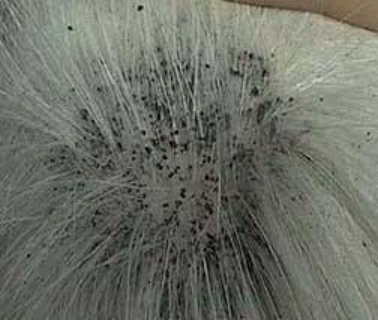
If you notice your pet scratching furiously and suspect fleas may be the culprit, there is an easy way you can check. Get a paper towel slightly wet and place your pet over top of it. Brush the pet's fur, letting fur and pet dander fall onto the paper towel. If dark spots are visible, and turn red, it could be the blood in flea feces as it dissolves. By visiting your vet, flea presence can be confirmed.

Once you know for sure, begin treating your pet and home. Carefully read all instructions and warnings on the product label as some can be dangerous if improperly used or administered to the wrong type of animal. Some chemicals can affect people and are unsafe for use around fish tanks. Be sure to follow all directions.

Treat all areas your pet spends time in. This includes your vehicle and yard. Vacuuming thoroughly before using treatments can force fleas to emerge from their cocoons, ensuring you eradicate as many as possible. Always empty and clean your vacuum after use, and get rid of bags immediately, sealing them in plastic bags and disposing of them away from you home.

With persistence and vigilance, you can have success in ridding your pet and home of fleas. Sometimes a repeat treatment is necessary to ensure complete eradication. Breaking the flea life cycle is imperative to ensuring they are no longer a problem for your pet and in your home.

Cat Diarrhea


Diarrhea is a cleansing mechanism of the body to rid of foreign substances that have irritated the bowel tract. Because diarrhea is abnormal we know that the cat is sick and we become frightened. Fortunately there are home remedies for cats which will aid the cat to return to its normal pattern. 

To restore your cat to becoming normal in the elimination process you need to consider feeding him bland foods such as chicken, beef, turkey, or lamb baby food. 

White Chicken or fish is also a good option. If your cat likes rice, macaroni, or potatoes mix any one of these with chicken or beef as treatment. 

Unflavored yogurt is another good choice to be considered. The yogurt helps to restore the necessary bacteria in the intestines. 

Do not give milk or other dairy products, as cats are lactose intolerant. Dairy products are difficult to digest and your cat is weak from the diarrhea. 

One day of diarrhea is okay, but if it lasts longer you will need to see your vet. And before you see your vet you will need to be prepared to help with the diagnosis as to the possibilities which might have caused the diarrhea. 

Here is a list of possibilities for the diarrhea:

Did you discover your cat eating out of the garbage? Did you introduce a new food? Has there been a change in activity? Is your cat experiencing stress? Has your cat played or eaten a non-food item? Has your cat eaten people food? Did any food that your cats consume contain dyes or artificial ingredients?

Also note any other symptoms that your cat may be experiencing. Symptoms may include vomiting, difficulty in walking, fever, and worms. These other symptoms could possibly indicate feline distemper or other types of diseases. 

One day is a light case of diarrhea and with the assistance of home remedies it will clear. However, if the diarrhea lasts more than one day and no matter what you do you cannot control it, see your vet. Do not let the diarrhea last more than twenty-four hours. After that time frame it becomes a very serious condition. 

Also kittens less than twelve weeks of age should be taken to the vet immediately. Do not let a whole day pass.

Fish Oil for Cats


Why Your Cat Needs Fish Oil

Fish Oil for Cats - Does your cat have dry, hairless patches? Does she show signs of low or no energy and stiff joints? Perhaps you have to get him a pharmaceutical grade fish oil with omega-3 fatty acids supplement. Say what? You might be considering right this moment.

Well, much like fish oil for human beings, fish oil for felines could help boost its immune system, cognitive functions, arthritis, behavior, levels of cholesterol, provide cancer prevention and give them a shiny coat.

Benefits of fish oil for cats can also assist with swelling which, if not treated, can lead to the kind of difficulties as strokes, heart attacks, high-cholesterol, early death, and many different kinds of infections.

Fish Oil for Cats is also really effective in treating numerous overall health difficulties and increasing their survival rate. Veterinarians are using fish oil with omega-3 fatty acids for cats in a regular therapy program because they are much more quickly absorbed into the system and show results faster than most of the others.

Exactly like our own food, their food lacks the extra Omega-3 fatty acids which they need just as much as we do. You may be asking yourself why you should worry about such a small dietary detail just for a cat, however let's be honest, exactly what would we do without having our furry friends? Study demonstrates those who own pets have far less health problems than individuals who do not special pets.

It has been verified that pet owners use a reduced heart attack mortality rate by 3%, better psychological well-being, reduced triglyceride and cholesterol levels, less stress, and visit the physician much less than people who do not have pets.

Research also show that kids who've pets experience a nurturing nature that might keep on into adult-hood, stay involved in extracurricular activities, for example sports activities, clubs, and hobbies, possess increased cognitive abilities, and less allergies when subjected to pets throughout their 1st years of life.

Right after giving the cat fish oil, you may not notice a change for some months. That is because, once again, the same as us, their systems change from within. From individual cells, to tissues, to organs, and ultimately the skin and hair become radiant. You don't have to purchase a special fish oil with omega-3 fatty acids for cats, the ones all of us use works just fine.

Omega-3 fatty acids that supply most advantages are DHA and EPA. Examine labels carefully to find the purest form of omega-3 fatty acids fish oil that filter out harmful toxins in the fish from the water streams they come from, making sure it has already been molecularly distilled in order to filter the harmful toxins that consist of the harmful chemicals mercury and dioxin. It's correct our cats need all of us for his or her well being just like we need them for our well being. Buy Fish Oil for Cats for your loved feline today
Fish Oil for Cats-Like fish oil for humans, Fish Oil for Cats can help improve cats immune system, cognitive functions, arthritis, behavior, cholesterol levels, provide cancer prevention and give them a shiny coat.

Information About Chlamydia in Cats


Both bacteria and viruses can cause conjunctivitis in cats. This condition is known as pink eye, the same thing that can affect dogs, humans, and other animals. Feline chlamydia results from a bacterial infection. Cats are usually infected with other viruses along with this disease like herpes virus and calicivirus. 

Chlamydia in cats usually affects those at the younger or older end of the spectrum. Those with damaged immune systems or other illness of some sort have an increased risk too. However, the bacterial infection can cause symptoms in any cat.

There is an assortment of ways that feline chlamydia can be transmitted. The bacteria can be passed via eye discharge, nose secretions, or saliva from infected cats. Mothers are also capable of transmitting the disease to their kittens while giving birth.

You should also know that it's possible chlamydia in cats to be transmitted in indirect ways. The bacteria can live in bedding, food dishes, and other places and can infect your cat if he comes into contact with them. Owners can also harbor the bacteria on their hands and pass it along to their felines.

Seeing the white of your cat's eyes turn red is one of the primary signs of feline chlamydia. The eye may also swell, with the third eyelid closing partially. Discharge that's very watery may also appear from the eyes. All of this will irritate your cat's eye, causing him to paw at it frequently. This illness may only cause symptoms in one eye at first. Eventually though, both eyes will likely experience problems. As mentioned, chlamydia in cats usually occurs at the same time as other respiratory conditions. Cats may have a fever, discharge from the nose, coughing, and sneezing if this occurs. 

Feline chlamydia doesn't usually prove difficult to treat as long as it's mild. Antibiotics can get rid of the bacteria. They may be given orally or placed directly in the affected eyes. The condition can get more problematic though if there are other problems at the same time. Your cat may have an upper respiratory illness that requires hospitalization.

Whenever giving your cat antibiotics to treat any condition, it's vital to go through the entire regimen. If you don't, then the bacteria you're trying to get rid of may mutate and grow stronger. If this happens, they may become resistant to the antibiotics.

If you have multiple cats in your household, then you'll especially need to be careful with feline chlamydia. It can easily be transmitted to other cats. Keep infected cats in seclusion. Disinfect bedding, food dishes, and other places that can harbor the bacteria. Also, make sure that you wash your hands thoroughly after you touch the infected cat so that you don't spread it to your other felines.
Hopefully, you're aware that there are many different conditions that can affect your cat such as rhinotracheitis in felines. Learning about these conditions will help you get your cat treated quickly in case he does fall ill. Make sure you stop by common-cat-diseases.com right now to learn about many of these diseases in felines.

The Truth About Cat Endocrine Alopecia.


There are many reasons why cats can experience problems with hair loss. A relatively rare reason for this to occur is because of feline endocrine alopecia. Vets don't exactly know why this rare skin condition occurs.

Whenever it does develop though, your cat's hair will start thinning. Various areas of the body will be affected by hair loss. You may notice that these areas appear to be the same on both sides of the body. Two areas that are most often affected include the rear legs and abdominal region.

Certain other medical conditions can mimic the signs caused by feline endocrine alopecia. To see if your cat is really suffering from this condition, the vet will have to rule out other possible causes of the hair loss first. Parasites and conditions like ringworm can cause similar signs.

In order to make a diagnosis of endocrine alopecia in cats, vets typically look at a sample of hairs under a microscope. Doing so can help determine at what stage of their growth the hair were broken. Skin scrapings around the affected area can also help determine what's causing hair loss in your cat. Fungal infections like ringworm can easily cause signs.

A blood sample may also be in order if your vet suspects feline endocrine alopecia to be the problem. The sample won't be tested in the office though. A laboratory will need to inspect it to see how the endocrine system is functioning as far as hormones go.

As mentioned earlier, vets don't know why cat endocrine alopecia develops. Hormones like testosterone, estrogen, or thyroid hormone are some of the leading suspects though. Cats with the condition may need to start a regimen of hormone therapy to deal with it.

Cats that are eating foods that they're allergic to may experience spontaneous hair loss. Therefore, you may need to start your cat on a food trial to see if it helps relieve the signs. You may need to start feeding your cat a different type of food.

Sometimes, feline endocrine alopecia is treated with medications that are designed to grow the hair back. This isn't always the preferred method of treatment in cats though. These medications can lead to serious side effects in some felines. They can be toxic to the liver over time and also cause cardiac problems.

Cats may even develop other conditions like diabetes mellitus after taking these medications. Some even experience changes in their behavior.
It is vital that cat owners be aware that their feline can be affected by many different conditions such as chlamydia in cats. Learning about these conditions will help you get your cat treated quickly in case he does fall ill. To learn about a range of cat health problems, head on over to common-cat-diseases.com today.

Thursday, May 9, 2013

Eliminate Cat Urine Odor and Stains. The Right Cleaning Products.

Cat urine odor can be very disgusting, especially if your cat starts peeing outside its litter box. Bacteria growing in the urine makes it smell like ammonia. With time, bacteria will continue growing, and making cat urine smell much worse.

Because cat urine contains and produces ammonia, it is very recommendable not to use cleaners that contain ammonia.

The cleaning products used to get rid of cat urine smell can be divided into three categories:

Chemical. Chemical based products break down the molecules that cause cat urine smell. Some of this type of products can discolor carpets or furniture. It is recommended to always try the product in a little spot. Also some chemical components can be dangerous for you or your cat.

Bacterial. Bacteria based products contain bacteria that eat the urine odor components. They also contain enzymes.

Bacteria is introduced onto the stain. Having the appropriate conditions (food, moisture and temperature) bacteria will grow and reproduce very quickly.

Enzymatic. Enzyme based products contain enzymes. The enzymes help to speed up chemical reactions. Enzymes break up the urea into carbon dioxide and ammonia, two gases that evaporate quickly.

What is the best type of product to clean up cat stains and odor?

The best option is enzyme based products. These are the products that work better to eliminate permanently cat urine odor and stains.

For stains from carpets, mattresses, sofas or upholstery, a liquid based product will not work well. Maybe you have already being in this scenario: you have pour liquid soap onto the soiled area and follow the instructions. The stain and urine odor are gone for about a week or two, and then the stain and the odor come back.

The reason why a liquid based cleaning solution does not work is that you will never be able to wash all the wet liquid out. The fibers, pores, and fabrics have absorbed deep down the odor and the stain.

Liquid cleaners mask the smell during a short time. After a few days, the smell comes back.

The only way to get rid of stains and smell is to use a dry powder cleaning product. They work as sponges absorbing the elements that cause the odor.

Hope This Post was helpful for you to know about your cat.Feel Free to comment on this post.

Why Do Cats Like To Sleep So Much


  • One thing is for sure: cats know how to sleep. And they sleep a lot. However, so far nobody knows why they sleep so much, but you gotta admit that they are the most adorable creatures when asleep
  • As they choose the weirdest place to sleep. Either on top of a dog or in a pot. You name a place and they are there :)

Well, it's a known fact that cats evolved from a long line of hunters and predators and that probably has an effect on their sleeping pattern. Their diet may also play an important role. Since they are on protein rich diet that doesn't take them a lot of time of the day, they have plenty of time to sleep. 

And sometimes all they do is sleep, since they don't have things to do. Of course this applies for indoor cats. But there is always something you can find for your cat to do and stay awake and entertained. 

While newborn cats, well they sleep most of the time, but believe it or not this actually keeps them safe. As they don't attract attention and by that I mean, they don't attract predators. 
As for the cats in the wild, well they are constantly on alert in order to survive. 

While indoor cats are sleeping, they are still active and ready to go into action. And you can see that as all cats while sleeping have their ears rotating and as soon as they hear a noise or sense that someone is coming they open their eyes to check out the situation and if safe they go back to sleep again. 

And as I've already said at the beginning cats sleep basically anywhere. At the table, on a top of a piano, on the edge, anywhere. 
As long as it safe and comfortable enough for it to stretch that body. :) For example when it's cold it tries to find a shaded place where it can stretch out. While during the cool winter days a cat will try to find a place warm enough, like warm sunshine or next to a heat source. 


Another interesting fact is that cats like to sleep in their owners' beds. And people who use this method actually benefit from it, as it strengthens the human-feline bond and let's not forget all the warmth and the comfort your cat gives you. 

And one last thing. Cats dream, too. But, unfortunately for now we can only guess what they dream about.

Hope This Post Was Helpful To Know Something About Your Cat.

Tuesday, May 7, 2013

How To Stop Your Cat Scratching The Furniture.

If you have ever owned a cat, you are sure to know all about their claws and how they use them. Cats use their claws for traction, climbing, accelerating, moving, turning quickly, defending themselves and even for such mundane activities as cleaning up after using the litter box. It's part of their natural activity. Just watch a cat chase a toy in play and you'll see how they use their claws to grip, pull and rapidly change directions. 
 
  • All cats routinely scratch at things with their front feet. The main reason is to sharpen the front claws and to help shed the old outer husk-like layers
  • Scratching also exercises and strengthens the muscles in their front paws. Your outdoor cat will often use a tree to scratch at, but if your cat is confined within the home, he will look for alternatives, like furniture or carpeted stairs, especially the vertical surfaces. 

Get a Scratching Pole


  • If your cat is an indoor cat, you will need to provide a safe outlet for this behaviour with some sort of scratching post.
  • These are typically pads, posts or poles covered with carpet or made of compressed cardboard.
  • They vary in price from a few dollars for a small scratch pad to elaborate "condo" units covered in carpet with built in toys that can run into the hundreds of dollars.
  • They can also be made at home inexpensively from scraps of lumber and carpet remnants. 

A Scratching Pole Looks Like This-


  • The key is to begin training your cat to scratch in the appropriate areas while they are young and you can begin this by rubbing some catnip where you want the cat to scratch.
  • This is usually enough to start developing the habit.
  • If you have left it too late for this behaviour training, or you have an new addition that may not have been properly trained, you will to be quick to catch your cat in the act of scratching your furniture.
  • You then take your cat to its alternative scratching post or pad and reward its use with praise, plenty of affection and a few treats.
  • This may take some time and effort, so a little patience will go a long way. 
 
While in training, you can protect your furniture by using throws or sheets to deter your cat. You can also wrap specific areas with tin foil, sticky shelf paper like Mac-Tac or even use a natural repellent spray like citronella. Also, provide lots of toys and games to keep your cat from getting bored.

Just A Trim, Please

  • Trimming your cat’s claws regularly is another way to reduce the damage that a cat may do.
  • However, you have to be very careful that you don't clip too far, into the 'quick' of the nail as it will cause bleeding and pain.
  • The best time to do this is when your cat has developed a high level of trust with you and is very relaxed. It’s best with two people, one holding the cat, talking gently and being affectionate and the other clipping the nails quickly.
  • If you don't feel comfortable doing it yourself, have your cat's claws trimmed at the groomers on a regular basis.
NOTE:
 
De-clawing a cat is highly discouraged as it is a serious surgical operation, and not a matter to be taken lightly. A cat without claws is at a big disadvantage when going about its daily life. He is likely to be clumsy and at risk of hurting himself or being unable to defend himself. Many Veterinarians will no longer perform this procedure as it often results in aggressive behaviours once performed.
 
Many people think that you cannot train a cat and this is simply not true. With some time and a little patience, most cats will quickly learn whatever behavior you are trying to instill. Using these tips, you will be able to enjoy your cat and your furniture without worry.
 
Fell Free To Give Comments. Comments By You Are Most Welcomed.


Saturday, May 4, 2013


Know The Behavior of Your Cats

Cats are also wonderful animals. They are friendly and quite conscious in every act. Prior to buying cats as pets, it is advised to learn about their behavior and nature. 

They do have some behavioral issues like using the litter box, biting, being destructive with their claws, and excessive attention seeking problem. Always remember that cats are not at all bad in behavior, they are just uninformed a little in their nature and need care given to them.

 You must try to solve their behavioral problems one by one so that your pet cat does not feel confused and frustrated. Here are some most referred to behavioral issues in cats.

1.Attention-Seeking Behavior:
  • Cats do have attention-seeking behavior as well as increased vocalization when together.
  • The causes of these things may differ from one cat to another like emotional problems, physical pain, excessive punishment to the cat, and so on.
  • If they are suffering from Rippling Skin Disorder, this may also result in howling in the night hours.
2.Feeling Aggressive Towards Other Cats:
  • When you have cats in pairs or own more than 2 cats at home, it may result in fights between them.
  • In case the aggression is continuous and active between cats, it will turn out to be ugly and you will have to interfere.
  • The aggressive behavior between cats may occur because of some fear, redirected ruthless behavior, or due to some territorial issue.
3.Aggressive Behavior towards Humans:
  • The cats may feel angry towards people because of their master’s poor training in the early years, fear, love and many other factors.
  • You must be able to deal with such behavior of your cat. Try to curb their scratching and biting activities.
4.Obsessive-Compulsive Behavior in Cats:
  • Just like human beings, cats can also involve themselves in obsessive-compulsive behavior
  • They will show such behavior in acts like feeling hypertensive, wool sucking, fur pulling and extreme licking.
  • If you will understand the cause and will try your best to eradicate the problem, this will ensure speedy recovery of your cat.
5.Destructive and Harmful Chewing by Cats and Kittens:
  • Destructive chewing by cats is undesirable, first, because of the potential of danger to the cat, and second, because of damage to family valuables.
  • Causes of destructive chewing by cats can range from teething in kittens to curiosity or boredom, and even because of a nutrient deficiency.
6.Destructive Scratching by Cats:
  • Are you troubled by harmful clawing by your cats? Please don't consider Draconian measures such as anti-clawing a cat.
  • There are a number of ways you can keep your cats' claws happily engaged in legal clawing with these articles and aids, while protecting furniture and carpeting.
  • Look into getting a scratching post or tree.
7.Cat Urine Problems:
  • Inappropriate elimination (litter box avoidance) is the number one reason cats are surrendered to shelters.
  • By eliminating physical causes, such as urinary tract infections, then targeting other common reasons for litter box avoidance, you can help your cat overcome this undesirable behavior.
  • Remember that cats don't like to use a dirty toilet any more than you would.
8.Shyness and Fear in Cats:
  • Is your kitty a "scary-cat?" Shyness and fear stem from a number of causes, but can be overcome with gentleness and patience, as these tips explain.
  • It is always important to allow your cat to set his own pace, and to be patient if his pace is slower than you had hoped for.
9.Stress and Anxiety in Cats:
  • While stress itself is not of behavioral origin, it can lead to a number of problems often considered behavioral, such as litter box avoidance or depression.
  • When behavioral problems suddenly appear, savvy cat owners soon learn to first rule out signs of health problems, and next for stress factors, such as changes in the environment.
Hope All These Tips Where Helpful For You.Thanks For Reading My Post With Patience.

Who Else Want To Discover The Secrets Of Your Cats  CLICK HERE!

Friday, May 3, 2013

Simple Steps To Successful Cat Training

Well, we all know that cats can be very stubborn and that they usually have a mind of their own. This unfortunately makes it very difficult to train a cat.But, does this mean, a cat cannot be trained? No, not at all, contrary to what most people think, cats can be trained.
  • However, to make this work, you need to start training your cat when it is still very young.
  • I would even say, anyone who uses the right approach can train a little kitten.
  • On the other hand, training an older cat is very difficult and in many cases even impossible.
  • The secret to training a little kitten is to make it think that you are her mother and soon your little friend will start imitating what you are doing.
  • But first, you have to gain the trust and confidence of your cat.
  • This may take some time and patience, and it is really important that you don't shout at your cat or display any other aggressive behavior.
  • The fastest way to get your cat to do what you want is to be tender and loving with it and to encourage and reward it when it does the right thing.
  • Cats, like most animals like praise and they learn quickly that it pays off nicely when they do what you want them to do.
  • If you do have to reprimand your kitten don't use its name when doing so, because you don't want it to associate its name with something that might upset her.
  • As I already mentioned, it requires some patience to train a cat and it is important to remain consistent and diligent at all times until you obtain the desired results.
  • This also means that other family members and even friends that may visit you should use the same kind of commands and routines with your cat as you do.
Of course, this is not absolutely necessary to successfully train your cat.I'm also aware that this might be something a bit awkward or difficult to ask from someone else, but it will surely help and allow you to train your cat in less time than it would normally take.
  • So, what should you do when your kitten doesn't want to follow your instructions? By all means, never hurt it.
  • What you can do to reprimand your cat when it is doing something wrong is to flick a little bit of water at it or to clap your hands slightly to frighten it.
  • So, now you know the basic cat training techniques and as I already mentioned, be patient and don't give up too quickly.
  • A cat can be trained, especially when it is still very young and as you will see, a trained cat is just so much more fun and it is well worth the time and effort.